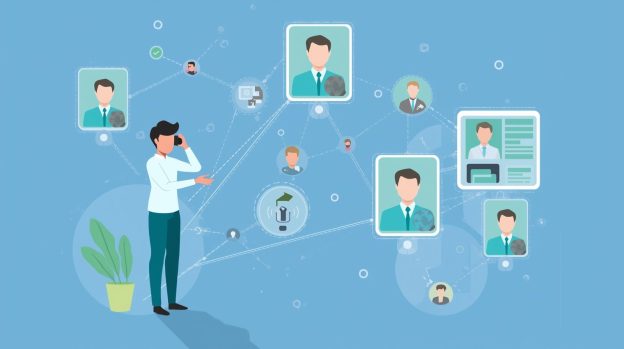

Real-Time Personalisation: How to Make Your App Adapt as Your User Changes
Many businesses fail to impress users with their mobile applications, and the reason behind this is that they don’t do mobile app personalisation according to users. To get a user returning to your app, it is necessary to have a user-adaptive application. This can be a rewarding strategy for your brand and business. In this blog, you can learn about how you can start with mobile app personalisation, along with the real-life tips and examples that will ensure your success.
What is Mobile App Personalisation?
Well, mobile app personalisation is the process of adjusting the app experience according to the user. This totally depends on the user preferences, behaviour, and needs. There are many ways of doing mobile app personalisation; you can send them push notifications based on their preferences, or you can update the application’s content according to the user’s needs and preferences.
Why is Mobile App Personalisation Important?
- Mobile app personalisation helps boost your engagement. Presenting relevant features and content helps in creating a better user experience, which also helps in generating great value.
- When you push relevant notifications to the user, it increases the conversion opportunity. As it offers the user the opportunity to buy more. Doing it often can help in increasing the conversion numbers for your business.
- When user gets what they want, they keep returning. So, by doing mobile app personalisation, you are also gaining the loyalty of your customers.
Strategies for Mobile App Personalization
You can find many ways tocreate mobile app personalisation, but in this blog, we have divided them into two main categories:
- Personalizing user experience: This means that the hard-coded features are tailored based on individual user experience. For example, think workout programs automatically customise their programmes according to the user fitness goals, or music apps start recommending songs based on the user’s listening habits.
- Contextual messaging personalisation: Under this, you can do real-time tracking of the user. For instance, suggesting products that are based on their location or based on their purchase history, you can recommend complementary items.
Implementing these two methods can result in creating unique opportunities, and it can also help design a holistic mobile app personalisation experience for the user.
Challenges of Mobile App Personalisation
As beneficial as mobile app personalisation seems, it can be challenging as well. But with the help of a good mobile app development company, you can overcome these challenges.
- Data collection & Privacy concerns: Concerns that are based on data privacy & security must be addressed proactively, as sharing personal information with mobile apps can be reluctant for users.
- Data quality issues: Most marketers struggle with data accuracy, which results in constant data updation and refining of data.
- Poor technology infrastructure: It can be challenging for you to maintain a mobile-first infrastructure, especially when you lack access to robust technology infrastructure & automation such as data analytics tools, real-time decision engines, and machine learning algorithms.
- Low-quality customer experience: Sometimes, mobile app personalisation can be unable to balance that can lead to the risk of overwhelming customers with too many options or irrelevant recommendations.
Bottom Line
Are you ready to give your users an experience they never had before? Then schedule a demo today and learn how Vervelogic, an IT Consulting Firm, can help you with your mobile app personalisation to increase customer engagement, loyalty, and revenue.